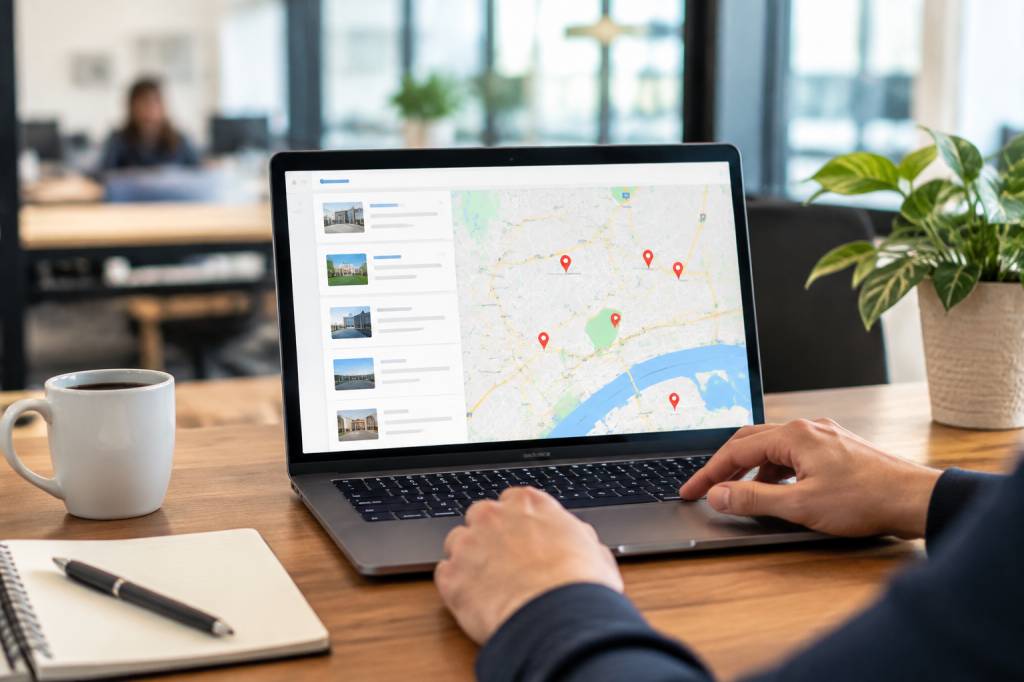

Growth online rarely begins with a dramatic launch. More often, it starts quietly: a customer searches for a service, finds a business they have never heard of, and decides to take a closer look. That small moment of discovery can become a phone call, a booking, a sale, or a long-term relationship.
For many businesses, especially small and independent ones, being discovered online can feel like trying to light a candle in a city full of neon signs. There are websites, social media platforms, paid adverts, review sites and search engines all competing for attention. So where should a business begin?
A free online listing is one of the simplest places to start. It can improve visibility, strengthen local search presence and give potential customers a reliable first impression without demanding a large marketing budget. Used thoughtfully, a free listing is not merely an entry in a directory. It is a small digital signpost pointing people towards your business.
What is a free business listing?
A free business listing is a public profile that displays essential information about your company on an online directory. Depending on the platform, it may include your business name, address, telephone number, website, opening hours, description, images and links to social media.
Directories such as True Directory help bring these details together in one accessible place. Instead of asking a potential customer to search through several pages, a listing gives them the information they need at a glance.
This matters because online attention is impatient. If someone cannot quickly establish what you do, where you are located or how to contact you, they may move on. Not because your business is unsuitable, but because the digital path to it was unclear.
A well-written listing removes that friction. It makes the next step obvious.
Visibility begins with being present
The first benefit of a free listing is straightforward: it gives your business another opportunity to be found.
When people search online for a product or service, they do not always begin with a specific company in mind. They may search for “independent florist near me”, “accountant in Manchester” or “eco-friendly cleaning services”. A directory listing can place your business within those discovery journeys.
Even if the listing does not immediately generate a sale, it increases the number of places where your company appears. Your website may be the centre of your online presence, but it should not be the only door into your business. A directory profile creates another entrance.
For a small company competing with larger brands, this can be especially valuable. A national chain may dominate advertising space, but a carefully completed local listing can help an independent business appear relevant, nearby and trustworthy.
Local search is built on useful details
Location remains one of the most powerful signals in online search. Customers often want a business that can serve their area quickly and conveniently. A local directory listing helps reinforce where you operate and what communities you support.
Imagine a customer in Bristol looking for a wedding photographer. They are unlikely to search only for “wedding photographer”. They might type “wedding photographer Bristol”, “photography studio near Clifton” or “natural wedding photography in Bristol”. The more accurately your business information reflects your location and services, the easier it becomes for relevant customers to recognise you.
This is why consistency matters. Your business name, address, telephone number and website should be written in the same way across your listing, website and other online profiles. Small discrepancies can cause confusion. If your address appears differently in three places, which one should a customer trust?
Before publishing a listing, check that it includes:
- Your correct business name
- A complete address or clearly defined service area
- A current telephone number
- Opening hours that reflect reality
- A working website link
- A concise description of your products or services
- Relevant photographs or branding where available
These details may seem ordinary, but online growth is often built from ordinary things done consistently well.
A listing can strengthen trust
Trust is rarely created by one grand gesture. It accumulates through a series of small confirmations. A professional website helps. Clear contact details help. Positive reviews help. A complete directory profile helps too.
When a customer finds your business in a recognised directory, they may feel reassured that the company is genuine and established. This is particularly important for newer businesses that have not yet built a large following or accumulated years of online reviews.
Your listing should therefore be treated as a public introduction. What would you say if a potential customer walked through the door for the first time? The description should answer that question in a few clear sentences.
Explain what you offer, who you help and what makes your business different. Avoid filling the space with vague claims such as “the best service” or “number one quality”. These phrases are common enough to have lost their sparkle. Specific details are more persuasive.
For example, a local repair company might write:
“We repair domestic washing machines, dishwashers and tumble dryers across Leeds, with same-week appointments and transparent pricing.”
That sentence is simple, but it tells a customer exactly what the company does, where it works and what to expect. Clarity has a quiet power of its own.
Free does not mean careless
Because there is no financial cost, some businesses treat a free listing as an administrative chore. They add a name, telephone number and a hurried sentence, then forget about it.
That is a missed opportunity.
A free listing still represents your brand. Spelling mistakes, outdated opening hours, poor images or an empty description can suggest that the business itself is disorganised. Customers may not consciously analyse these details, but they notice when something feels neglected.
Take a few minutes to make the profile accurate and inviting. Use a short, natural description rather than copying a block of text from your website. Add a high-quality logo or photograph. Make sure the link works on a mobile phone. Think of the listing as a shop window: it does not need to be extravagant, but it should be clean, clear and open.
Supporting your wider SEO strategy
Search engine optimisation can sound technical, but part of it is simply helping search engines understand your business. Online directories contribute to this by creating references to your company across the web.
When your business information appears consistently on reputable platforms, search engines gain more confidence in the accuracy of that information. These references can support your broader local SEO strategy, particularly when the listing includes relevant categories, location details and a link to your website.
A directory listing will not replace a useful website or thoughtful content. It is one piece of a much larger picture. However, small pieces matter. A business that regularly builds accurate online references is giving search engines and customers more reasons to trust what they find.
Choose categories carefully. If you run a sustainable clothing shop, selecting “retail” may be accurate but not especially distinctive. A more specific category, where available, can help you reach people with a clearer intention. Relevance is more valuable than attempting to appear everywhere.
Turning discovery into action
Visibility is only the beginning. Once someone finds your listing, what should they do next?
Every profile should offer a clear route forward. That might be a telephone call, an email, a website visit, a booking request or a journey to your premises. If the customer has to guess, you have introduced an unnecessary obstacle.
Use practical calls to action in your description and make sure the relevant contact options are visible. A landscape gardener could invite visitors to request a quotation. A café might direct customers to its menu. A consultancy could encourage prospective clients to arrange an initial conversation.
The call to action should match the customer’s likely stage in the buying process. Someone discovering your business for the first time may not be ready to purchase immediately, but they may be willing to view your portfolio, read your services page or send a question.
Think of the listing as a bridge. It should lead naturally from curiosity to confidence, and from confidence to contact.
A useful example: the independent bakery
Consider a small bakery in York. Its owner has a limited advertising budget and relies mainly on passing trade and recommendations. The bakery creates a free online listing with a warm description, accurate opening hours, photographs of its sourdough loaves and a link to its website.
The profile also explains that the bakery accepts pre-orders for celebration cakes and supplies nearby offices with breakfast pastries. Suddenly, the listing does more than announce that the shop exists. It communicates its character and reveals services that local customers may not know about.
A visitor searching for “fresh bread near York city centre” may discover the bakery. Another searching for “office breakfast delivery York” may find it for an entirely different reason. One listing can open several doors because it reflects the full shape of the business.
Over time, the owner can update the profile with seasonal products, holiday opening hours and new photographs. The listing becomes a living part of the bakery’s marketing rather than a forgotten line in an online database.
Use your listing as a source of insight
A listing can also teach you something about customer behaviour. If the platform provides views, clicks or other statistics, review them periodically. Are people visiting your website but not calling? Are they looking at your profile during weekends? Do seasonal updates attract more attention?
These signals may not provide a complete picture, but they can raise useful questions. Perhaps your opening hours need to be clearer. Perhaps your description should focus on a service that receives the most interest. Perhaps customers are finding you through a category you had not expected.
Marketing becomes more effective when it is treated as a conversation rather than a broadcast. Your audience is constantly telling you what it needs, sometimes through clicks and sometimes through silence. Pay attention to both.
How to create a stronger free listing
A successful listing does not require elaborate copywriting. It requires precision, honesty and a little care. Before you publish or update your profile, consider the following steps:
- Write for real customers, not for search engines alone.
- Include the towns, cities or areas you genuinely serve.
- Describe your main services using words customers are likely to understand.
- Add a clear and recent image that reflects your business.
- Check every contact link and telephone number.
- Keep opening hours updated, especially around bank holidays.
- Invite satisfied customers to leave genuine reviews where appropriate.
- Return to the listing regularly and refresh information when your business changes.
Do not exaggerate your service area or make promises you cannot keep. Online growth built on inaccurate information tends to unravel quickly. A customer who travels across town only to discover that your opening hours are wrong will remember the inconvenience more vividly than the listing itself.
The quiet advantage of consistency
Online growth is often portrayed as a sudden breakthrough: one post goes viral, one advert changes everything, one search ranking transforms a business overnight. Those moments can happen, but they are not a dependable strategy.
More often, growth comes from a series of modest improvements. A complete profile. A better photograph. A clear description. A current website link. A customer who finds the right information at the right moment.
A free listing is one of those improvements. It costs nothing to create, takes little time to maintain and can support your visibility across search and local discovery. It gives your business another chance to be seen by someone who is already looking for what you offer.
In a crowded digital marketplace, that chance is worth taking. Add your business to a trusted directory, make the information useful and keep it alive as your company evolves. The signpost may be small, but for the right customer, it can point towards something they have been searching for all along.