


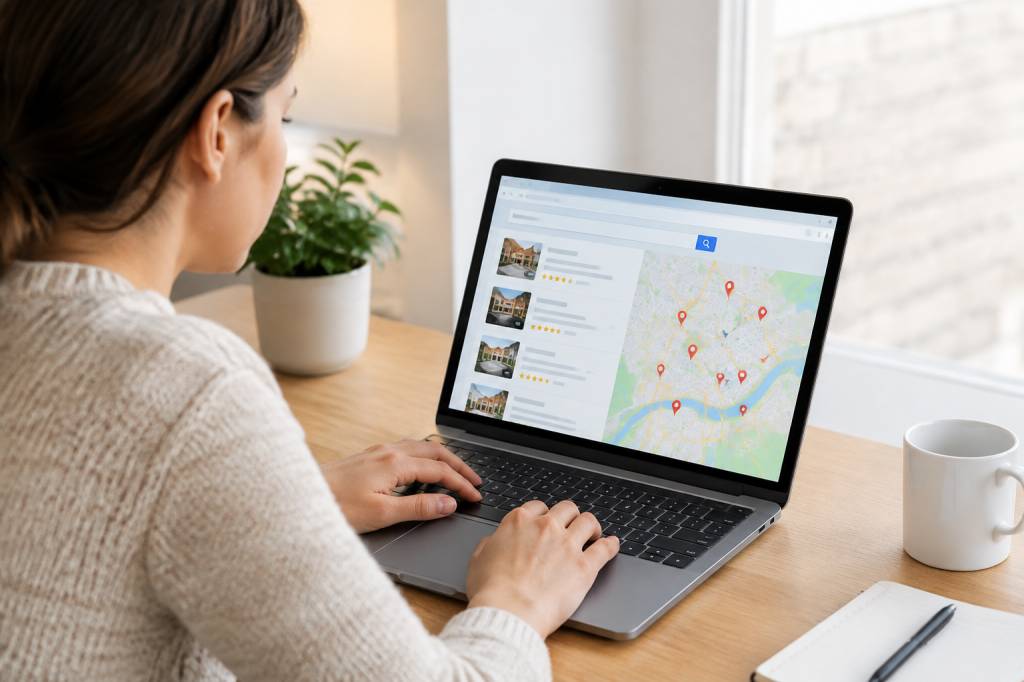
Finding a reliable company or local service in the UK should be simple. In practice, it can feel more like walking through a crowded high street where every shop window promises the same thing: quality, speed and unbeatable value. Some deliver exactly that. Others look convincing until the first invoice arrives.
This is where an online business directory UK users can trust becomes useful. A good directory does more than display names and telephone numbers. It helps people discover local businesses, compare their services and make more informed decisions before spending time or money.
Whether you are searching for a solicitor in Birmingham, a roofer in Leeds, an independent café in Bristol or a software company serving clients across the country, the right directory can shorten the distance between a need and a dependable solution.
Why online business directories still matter
Search engines are excellent at producing options. They are less reliable at telling you which option deserves your confidence. A search for “local electrician” may return sponsored listings, national platforms, outdated websites and businesses operating many miles away from your address.
Business directories provide a more focused starting point. They organise companies by location, industry and service, making it easier to understand the local commercial landscape. Rather than scrolling through a long list of loosely related results, you can explore businesses that belong to a particular area or category.
For customers, this saves time. For small businesses, it creates visibility beyond social media and paid advertising. A well-maintained listing can act as a compact introduction: who the company is, what it offers, where it operates and how a potential customer can get in touch.
There is also something reassuring about local discovery. A company rooted in a community often has a reputation that travels by word of mouth. Online directories bring that local character into a digital space, where it can be found by people who may not yet know the business exists.
Start with a precise search
The most useful directory search begins with a clear question. “I need help with my house” is broad. “I need a boiler service in Nottingham before winter” is much more practical.
Before browsing, identify three details:
- The service required: for example, accounting, home repairs, digital marketing or vehicle maintenance.
- The location: include the town, city or postcode area when proximity matters.
- The urgency and scale: a same-day repair and a long-term commercial contract require different searches.
Specific wording reduces noise. A business directory is most effective when you use its categories and location filters rather than relying on vague phrases. If you are looking for an independent wedding photographer in York, searching for “photographer” alone may produce too many irrelevant results. Narrowing the category and area gives you a more useful shortlist.
It is also worth considering whether the business serves only its immediate town or works across a wider region. Some specialist firms, particularly consultants and technology providers, may be based in one city while serving clients throughout the UK.
Read the listing beyond the business name
A directory listing should offer more than a company name and a phone number. When assessing a potential provider, look for information that helps answer the practical questions a customer naturally has.
- What products or services does the company provide?
- Which towns, cities or regions does it cover?
- Does it specialise in residential, commercial or public-sector work?
- Are opening hours and contact details clearly displayed?
- Does the description explain what makes the business different?
- Is there a link to an official website or portfolio?
- Does the listing appear current and professionally maintained?
Details matter. A kitchen designer who explains their process, materials and service area gives you more confidence than a listing containing only the phrase “best kitchens in town”. Grand claims are easy to write. Useful information takes a little more effort.
Pay attention to consistency as well. If the company name, address and telephone number differ across several online platforms, pause before making contact. An old address may be harmless, but it can also suggest that the business has not reviewed its public information for some time.
How to identify a trusted company
No directory should replace your own judgement. It should support it. Once you have found a few promising businesses, take a moment to verify their credibility.
Start with the company’s website. Does it provide a clear explanation of its services? Are there real examples of work, customer information and straightforward ways to make contact? A polished website is not proof of excellence, but a transparent one often signals that the business takes communication seriously.
Check whether the company has a registered business presence where appropriate. For many UK companies, Companies House can provide useful information about registration and status. Trade associations, professional bodies and relevant accreditation schemes may offer additional reassurance, particularly in regulated or technical sectors.
Reviews can help, but they deserve a careful reading. A long list of five-star comments may look impressive, yet the detail within those reviews is more valuable than the rating itself. Look for references to punctuality, communication, workmanship and how the business handled problems.
One negative review should not automatically disqualify a company. Even the most organised business may occasionally encounter a difficult delivery, a scheduling mistake or an unhappy customer. The important question is how the company responded. A thoughtful reply can reveal more about its character than a flawless string of brief compliments.
Compare local services without chasing the cheapest price
Price matters, particularly when budgets are tight. But the lowest quote is not always the best value. A bargain that leads to delays, poor workmanship or unexpected charges is rarely a bargain for long.
When comparing businesses, consider the complete offer:
- What is included in the quoted price?
- Are materials, delivery, travel or call-out charges separate?
- What timescale has been promised?
- Is there a written agreement or clear scope of work?
- What happens if something goes wrong?
- Does the business provide a guarantee or aftercare?
Imagine two decorators quoting for the same room. One offers a remarkably low price but gives no detail about preparation, paint quality or completion time. The other provides a written breakdown, explains the number of coats and includes a realistic schedule. The second quote may be higher, but it is easier to understand and therefore easier to trust.
Good directories make this comparison simpler by helping you discover several relevant providers. They do not turn every decision into a race to the bottom. Local businesses have different levels of expertise, overheads and specialisms. The aim is to find the right balance between cost, quality and confidence.
Look for signs of a genuine local presence
Local does not always mean small, and small does not automatically mean better. However, a genuine local presence can be valuable when you need a quick response or face-to-face communication.
Look for evidence that a business understands the area it serves. A local estate agent should know the neighbourhoods it represents. A building firm should be familiar with local property types and planning considerations. A catering company should understand the venues and suppliers in its region.
Location can also influence availability. A plumber based nearby may be able to respond more quickly to an emergency than a company operating from another county. Conversely, a specialist cybersecurity consultancy may deliver excellent work remotely, making its physical location less important.
The key is to match geography to the service. For urgent, practical or location-dependent work, proximity may be essential. For creative, professional or digital services, expertise and communication may matter more than distance.
Use categories to discover businesses you might miss
One of the quiet strengths of an online business directory is discovery. Search engines tend to reward businesses that already have strong online visibility. Directories can help lesser-known companies appear alongside more established names.
Explore related categories rather than stopping at the first result. Someone searching for “office furniture” might also find workspace designers, commercial interior specialists or ergonomic equipment suppliers. A person looking for a wedding venue could discover florists, photographers, transport providers and event planners in the same area.
This broader view is particularly useful for business owners. A company preparing to relocate may need accountants, removals firms, IT support, signage specialists and commercial property advisers. Instead of researching every need from the beginning, a well-organised directory can become a practical local business map.
It can also reveal the texture of a city. Behind the familiar high-street names are independent manufacturers, family-run services, emerging technology firms and sustainability-focused enterprises. These businesses are often part of what makes a place economically distinctive.
Questions to ask before making contact
Once you have selected two or three promising companies, prepare a short list of questions. This makes conversations more productive and gives you an early sense of how the business communicates.
- How long have you been providing this service?
- Have you worked on projects similar to mine?
- What information do you need before providing a quote?
- What is your current availability?
- Who will carry out the work?
- Are you insured or professionally accredited where relevant?
- What are the next steps if I decide to proceed?
A trustworthy company will not necessarily have an instant answer to everything. Complex work often requires a site visit, a consultation or further research. What matters is whether the response is clear, respectful and realistic.
Be cautious of pressure tactics. “Pay today or lose the offer” may be appropriate for a limited retail promotion, but it is a worrying approach when you are considering major repairs, financial advice or a long-term contract. Reliable businesses allow customers reasonable time to understand their options.
How businesses can build trust through their directory profile
Trust works in both directions. Customers use directories to find credible companies, while businesses use them to demonstrate credibility. A complete profile is one of the simplest ways to make a strong first impression.
Business owners should keep the following information up to date:
- Business name, address, telephone number and email address.
- Opening hours and service availability.
- A concise description written for real customers.
- Relevant categories and service areas.
- Links to the official website and social profiles.
- Recent photographs, project examples or product information.
- Professional qualifications, memberships or accreditations.
A listing should sound like the business behind it. A friendly independent café does not need corporate language. A specialist engineering firm should not hide its technical strengths behind vague marketing phrases. Clear writing helps the right customers recognise the right provider.
It is equally important to update the profile when circumstances change. A moved office, altered opening hours or new service should not remain buried in an old listing. Accuracy is a small form of respect for the people searching.
A safer, smarter way to choose
The best approach combines the convenience of an online directory with a few sensible checks. Use the directory to build a shortlist, then investigate each business through its website, reviews, professional credentials and direct communication.
Think of the process as a conversation rather than a transaction. You are not simply selecting a logo from a list. You are deciding who will repair your home, manage your accounts, build your website or help your company grow.
In a busy digital marketplace, trust is rarely created by one dazzling claim. It is built through accurate information, visible experience, responsive communication and a willingness to be specific. An online business directory UK customers and companies can rely on gives those qualities a clearer place to be seen.
And sometimes, the most valuable discovery is not the loudest business on the page. It is the quiet, capable company nearby, waiting to be found.