Once a symbol of heavy industry and coal, Newcastle is quietly rebranding itself as one of the UK’s most dynamic hubs for green innovation. Through a mix of public policy, private investment and academic research, the city is using the transition to a low‑carbon economy as a lever to revive jobs, attract talent and diversify its local economy. From clean energy projects along the River Tyne to smart mobility trials in the city centre, Newcastle is treating climate action not as a cost, but as a driver of long‑term economic growth.
From Industrial Heritage to Low‑Carbon Future
Newcastle’s economic story has long been rooted in coal mining, shipbuilding and heavy manufacturing. As those sectors declined in the late twentieth century, the city faced the familiar challenges of deindustrialisation: job losses, out‑migration and a shrinking tax base. Policymakers, businesses and universities have since come to view green innovation as a strategic opportunity to reshape the city’s economic profile.
This shift aligns with the UK’s legally binding net‑zero targets and with growing investor interest in sustainable finance. Newcastle’s leaders are positioning the city as a place where companies can test, develop and deploy green technologies at scale. The aim is to use environmental sustainability as an anchor for attracting new firms, supporting local startups and upgrading existing industrial capabilities.
Newcastle’s Green Economy Strategy
Local authorities have placed the green economy at the centre of Newcastle’s long‑term development plans. The city council has adopted climate policies that go beyond national requirements, seeking to cut emissions while fostering innovation.
Key pillars of this strategy include:
- Investing in smart and resilient energy infrastructure
- Supporting green innovation clusters around universities and business parks
- Encouraging low‑carbon transport and urban design
- Leveraging public procurement to stimulate local green supply chains
These initiatives are not framed purely as environmental measures. They are also promoted as tools for boosting productivity, raising skill levels and creating stable, future‑proof employment in Newcastle and the wider North East.
Energy Transition on the River Tyne
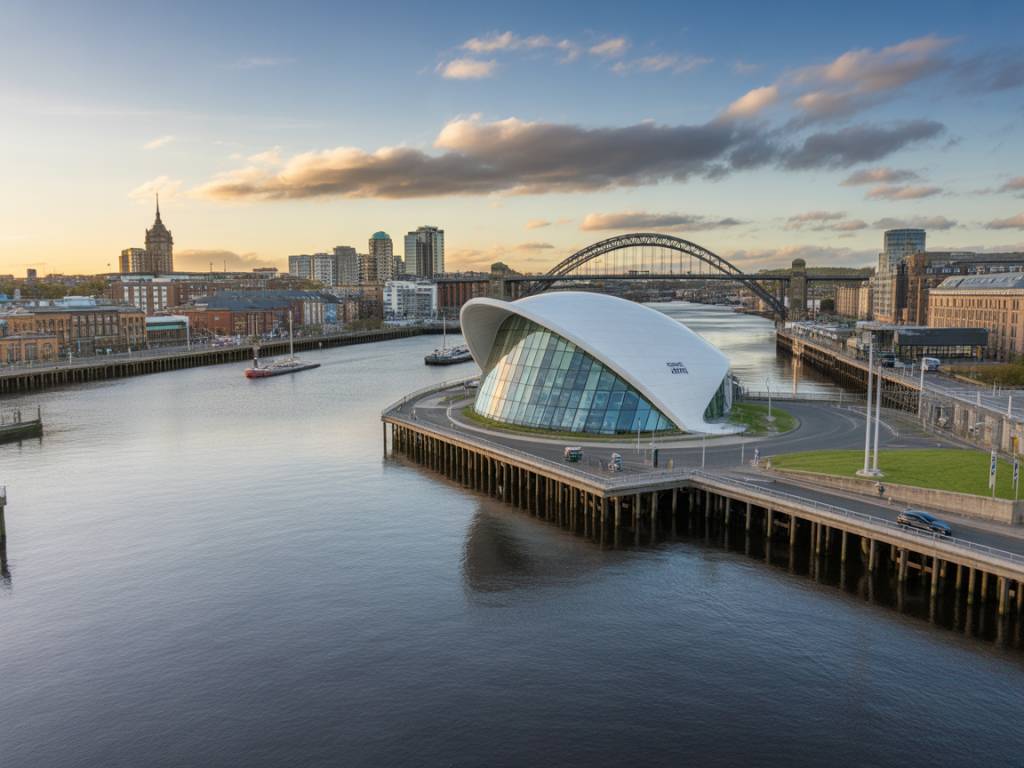
The River Tyne, once lined with coal ships and heavy engineering plants, is becoming an important corridor for renewable energy and offshore technology. Former industrial sites are being re‑used for clean energy manufacturing, research and logistics, turning Newcastle’s geographical advantages into a platform for green growth.
The North East is already a key player in offshore wind, and Newcastle’s port facilities and engineering expertise allow local firms to participate in this sector’s supply chains. Companies based in and around the city are involved in:
- Design and maintenance of offshore wind turbines
- Development of subsea cables and connectors
- Engineering services for marine energy projects
- Environmental monitoring and data analytics
These activities draw on Newcastle’s historic strengths in engineering while aligning them with the requirements of a low‑carbon economy. They also create demand for skilled labour, from technicians and project managers to data scientists and marine specialists, reinforcing the local jobs market.
Universities as Engines of Green Innovation
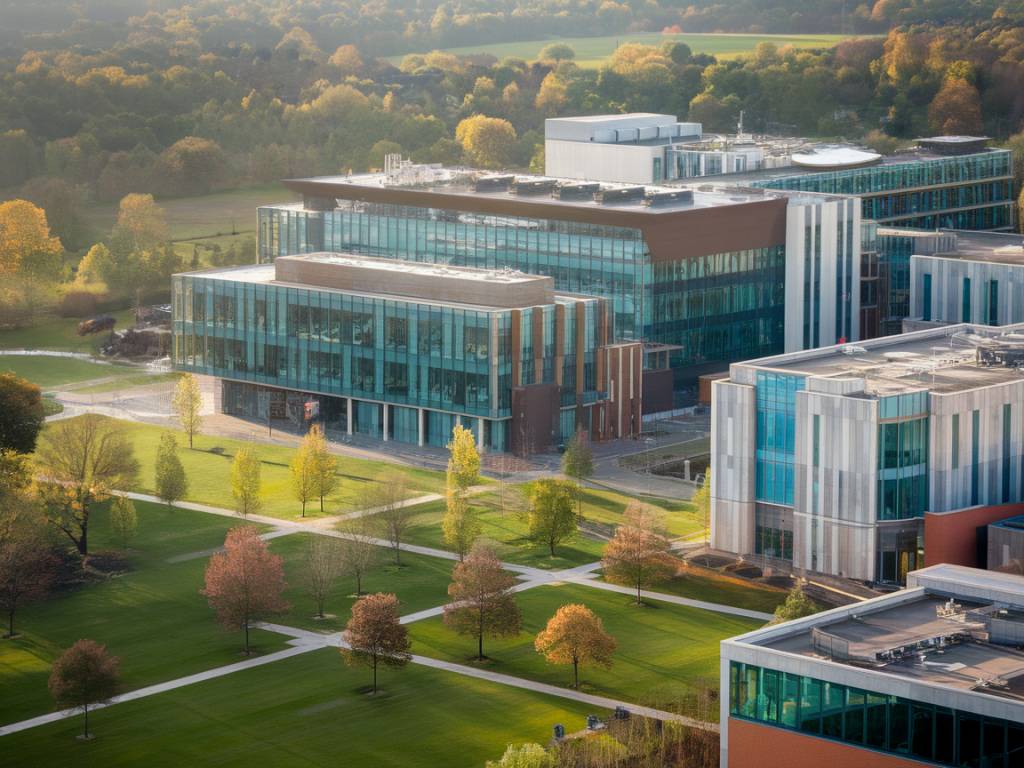
Newcastle University and Northumbria University play a central role in the city’s green transformation. They act as innovation engines, linking academic research to practical applications in business and public policy. Their expertise in energy systems, climate science and urban planning provides the intellectual foundation for many of Newcastle’s green initiatives.
Research centres and labs in the city focus on topics such as:
- Smart grids and integrated energy systems
- Energy storage and battery technology
- Low‑carbon transport and mobility services
- Climate resilience and sustainable urban design
These institutions often collaborate with local authorities and industry partners. Pilot projects are tested in real‑world conditions across the city, turning Newcastle into a living laboratory for green innovation. This approach not only accelerates the deployment of new technologies but also attracts students, researchers and entrepreneurs who wish to work at the intersection of sustainability and business.
Reinventing Transport and Urban Mobility
Sustainable transport is a critical component of Newcastle’s strategy to reduce emissions and stimulate its local economy. The city is investing in public transit, active travel infrastructure and digital mobility services designed to make it easier for residents and visitors to move around without relying on private cars.
Key initiatives include:
- Upgrading bus corridors and introducing low‑emission or electric buses
- Expanding dedicated cycling lanes and improving pedestrian routes
- Trialling electric vehicle charging hubs across neighbourhoods
- Supporting shared mobility schemes such as bike‑share and e‑scooters
These projects support local businesses by improving access to city centres and commercial districts while reducing congestion and pollution. They also create new opportunities in vehicle maintenance, digital services and infrastructure management, expanding the scope of Newcastle’s green job market.
Green Buildings and Regenerative Urban Development
Newcastle’s built environment is another focal point for green investment. Retrofitting existing buildings, improving energy efficiency and integrating renewable technologies are seen as practical ways to cut emissions and create local employment.
Across the city, developers and housing associations are working on:
- Deep energy retrofits of social housing and public buildings
- Installation of heat pumps, rooftop solar and improved insulation
- Use of sustainable materials and low‑carbon construction techniques
- Mixed‑use developments planned around public transport hubs
These projects require local contractors, architects, engineers and skilled trades, stimulating small and medium‑sized enterprises (SMEs). For residents, energy‑efficient homes can reduce fuel bills and improve comfort, offering tangible social benefits alongside environmental gains.
Startup Ecosystem and Green Entrepreneurship
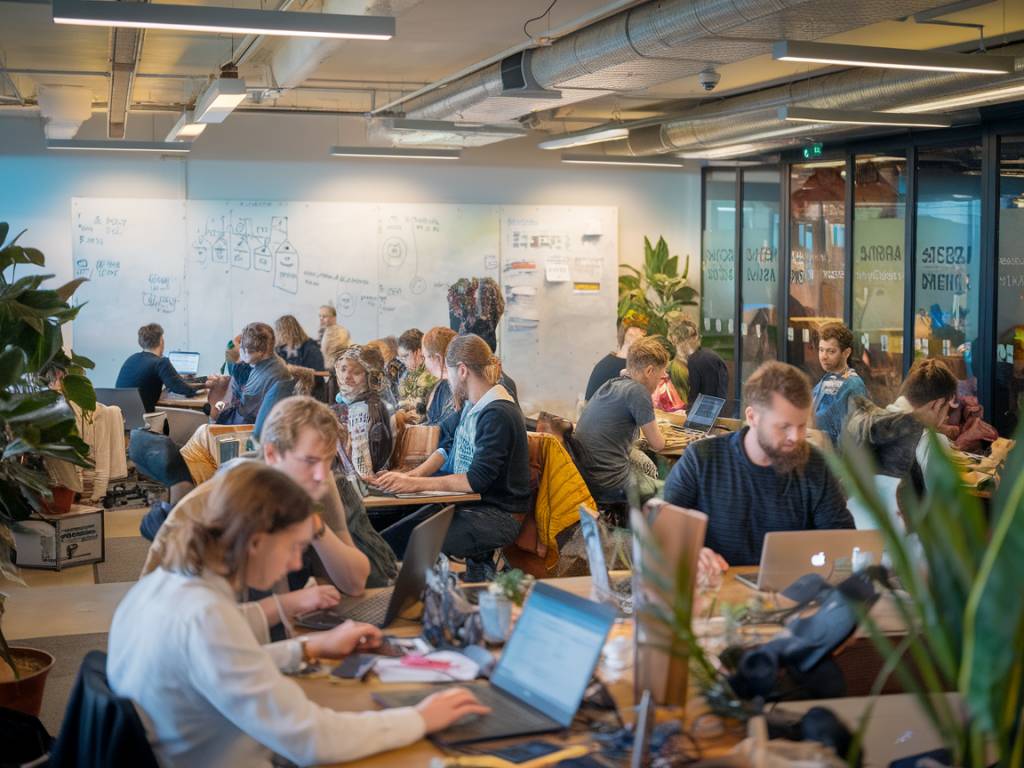
Newcastle’s emerging startup scene is increasingly oriented toward sustainability. Incubators, accelerators and co‑working spaces in the city host companies working on energy software, climate analytics, circular economy solutions and clean mobility services. This growing ecosystem helps commercialise research from local universities and draws in entrepreneurs from other regions.
Support mechanisms for green startups typically include:
- Access to technical advice from academic and industry mentors
- Seed funding and links to impact investors
- Shared laboratory and prototyping facilities
- Networking events focused on climate tech and sustainable business models
By fostering green entrepreneurship, Newcastle is diversifying its economic base beyond large employers. Early‑stage firms can scale, create high‑value jobs and form the next generation of anchor companies in the local economy.
Financing the Green Transition
Financing is a crucial element in transforming green ideas into real projects. Newcastle is benefiting from a mix of national funding streams, private capital and local partnerships to support its energy, transport and regeneration efforts. Green finance is moving from a niche concept to a mainstream tool used by banks, pension funds and corporate investors.
Investment flows are directed toward:
- Renewable energy facilities and grid upgrades
- Energy efficiency programmes in housing and public buildings
- Low‑carbon transport infrastructure and digital mobility platforms
- Research and innovation clusters around universities
For local authorities, aligning investment with clear climate and economic objectives helps to de‑risk projects and attract partners. For investors, Newcastle’s clear strategy and growing portfolio of green assets make the city an increasingly credible destination for sustainable finance.
Jobs, Skills and Inclusive Growth
As Newcastle’s green innovation agenda expands, it is reshaping the city’s labour market. New roles are emerging in renewable energy, environmental consultancy, data analytics, sustainable construction and low‑carbon logistics. These jobs often require specialised skills, creating demand for targeted training and reskilling programmes.
Local colleges, universities and training providers are responding with courses focused on:
- Energy systems engineering and smart grid management
- Retrofit coordination and low‑carbon construction techniques
- Electric vehicle maintenance and charging infrastructure
- Environmental management and sustainability reporting
There is also a strong emphasis on inclusive growth. Policymakers are attempting to ensure that residents from all neighbourhoods benefit from the emerging green economy, whether through apprenticeships, community energy projects or targeted employment schemes. This social dimension is seen as vital for maintaining support for the city’s transition and for tackling long‑standing inequalities.
Challenges and Future Prospects
Newcastle’s efforts to leverage green innovation for economic revitalisation face several challenges. Securing consistent, long‑term funding remains complex, especially as public budgets tighten. Coordinating between multiple stakeholders – from central government and local authorities to universities, businesses and community groups – requires sustained governance and clear communication.
There are also practical issues, such as upgrading ageing infrastructure, overcoming planning constraints and ensuring that local companies can compete in global clean‑tech markets. Nevertheless, the direction of travel is clear: environmental performance and economic competitiveness are becoming increasingly intertwined.
As demand for low‑carbon solutions grows across the UK and beyond, Newcastle’s early investment in green innovation is positioning the city as a credible partner for industry and research. Its combination of industrial heritage, academic strength and civic ambition offers a model for other post‑industrial cities exploring how to revitalise their local economies in a carbon‑constrained world.