


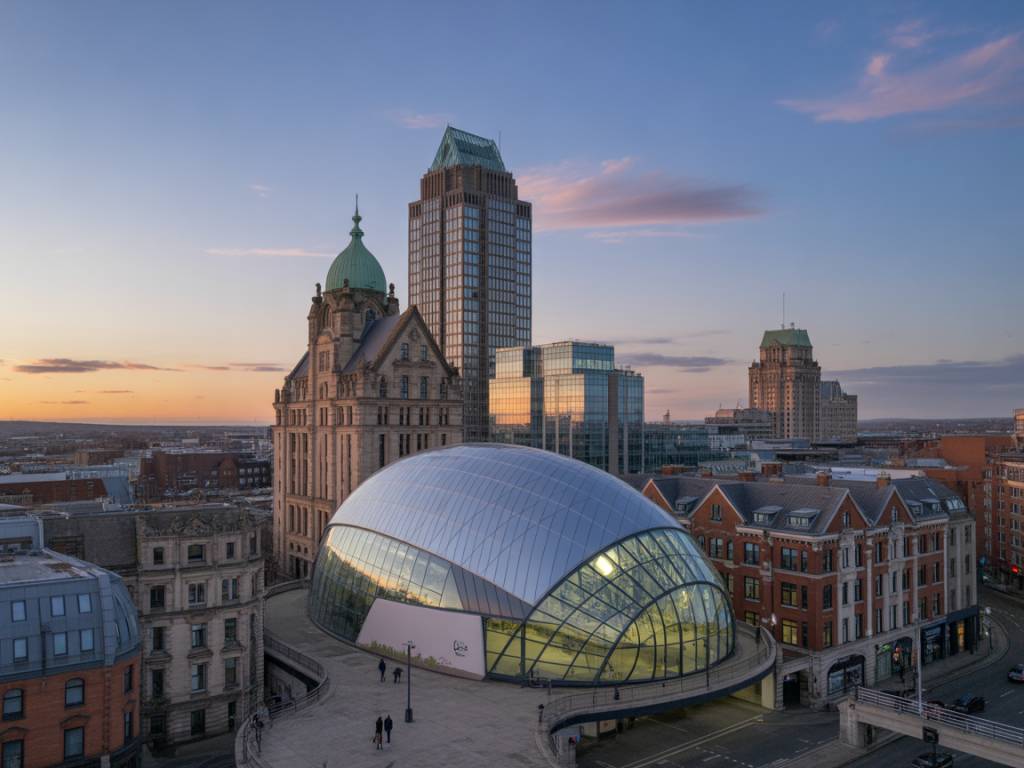
Manchester is increasingly being recognised as one of the UK’s most dynamic centres for green innovation, sustainable business growth, and enterprise development. Long associated with industrial transformation, the city is now building a new economic identity rooted in climate technology, low-carbon infrastructure, digital capability, and entrepreneurial activity. For investors, startups, policymakers, and established companies, Manchester is becoming a compelling case study in how a major UK city can align economic expansion with environmental transition.
The rise of Manchester as a green innovation hub is not happening by accident. It reflects a combination of strategic public investment, strong university research, a skilled workforce, growing access to finance, and a business ecosystem that is increasingly shaped by sustainability goals. As net zero targets push organisations to rethink operations, supply chains, energy use, and product design, Manchester is positioning itself as a city where green enterprise can scale.
A city with industrial heritage and modern green ambition
Manchester’s transformation into a sustainability-led economy is especially notable because of its industrial past. The city was once synonymous with manufacturing, textiles, engineering, and large-scale commerce. Today, that legacy is being repurposed for the clean economy. The same industrial capability that once powered the northern economy is now being redirected toward renewable energy, sustainable materials, smart mobility, and circular economy solutions.
This historical continuity matters. Manchester already has the infrastructure, business culture, and urban density that support innovation. What has changed is the direction of that innovation. Rather than focusing solely on traditional industrial output, the city is fostering a more resilient and future-facing model built around green technology, enterprise sustainability, and climate-conscious growth.
For businesses searching for a UK location with both heritage and momentum, Manchester offers a rare combination: an established commercial centre with the flexibility to adapt to changing environmental and technological demands.
Universities as engines of green research and talent
One of Manchester’s strongest assets is its higher education sector. The city is home to leading universities that contribute to research in environmental science, engineering, energy systems, data analytics, materials innovation, and sustainable manufacturing. These institutions play a crucial role in supplying both ideas and talent to the local economy.
University-led research often feeds directly into commercial activity through incubators, spinouts, partnerships, and innovation clusters. This makes Manchester especially attractive to startups and scaleups operating in the green economy. Companies working in areas such as carbon measurement, clean energy storage, building efficiency, and sustainable logistics benefit from access to academic expertise and a highly skilled graduate pool.
In practical terms, this means businesses can collaborate with researchers on product development, pilot new solutions in real-world settings, and recruit employees who understand both technical and environmental challenges. That ecosystem advantage is a major reason why Manchester is emerging as a hub for green innovation and enterprise.
Startups and scaleups driving the clean economy
Manchester’s startup ecosystem has expanded significantly in recent years, and green businesses are playing a growing role within it. Entrepreneurs are launching ventures focused on energy efficiency, climate data, sustainable packaging, EV infrastructure, waste reduction, and low-carbon services. At the same time, more mature scaleups are using the city as a base to expand nationally and internationally.
Access to affordable office space compared with London, along with a broad talent base and improving investor visibility, gives Manchester a practical advantage for growth-stage companies. Many founders also see the city as a place where sustainability-focused businesses can build credibility with customers, partners, and public-sector stakeholders.
Key sectors gaining traction include:
These businesses are not only contributing to emissions reduction; they are also helping Manchester diversify its economic base and create high-value jobs in the green sector.
Investment, funding, and the role of enterprise support
A successful green innovation hub depends on more than ideas. It needs capital, mentorship, policy support, and a business environment that helps ventures move from prototype to scale. Manchester has been strengthening all of these elements. The city benefits from a growing network of angel investors, venture capital interest, enterprise agencies, accelerators, and public funding streams focused on innovation and sustainability.
Government-backed programmes and local initiatives have helped increase awareness of the opportunities in the green economy. This matters because many climate solutions require longer development cycles and more complex technical validation than traditional digital startups. Enterprise support can make the difference between a promising concept and a commercially viable business.
Manchester’s investment appeal is also linked to its broader economic profile. Companies in the city can access clients across the North West, connect with national supply chains, and tap into a large consumer market. For green businesses, this provides an important launchpad for testing demand and scaling operations.
Low-carbon infrastructure and urban regeneration
Manchester’s green innovation story is closely tied to the physical transformation of the city. Urban regeneration projects, transport improvements, and energy-efficient developments are changing the built environment and creating opportunities for sustainable enterprise. New commercial districts and mixed-use developments are increasingly designed with carbon reduction, energy performance, and active travel in mind.
Infrastructure is especially important because many green businesses depend on the urban ecosystem around them. For example, firms working in EV charging, sustainable construction, smart buildings, and circular supply chains need cities that are open to experimentation and capable of supporting new technologies.
Manchester has also been investing in transport connectivity, which supports both productivity and sustainability. Better rail, tram, cycling, and walking links help reduce car dependency and improve access to business districts, research centres, and residential areas. Over time, this strengthens the city’s attractiveness for employers seeking to recruit and retain talent in the green economy.
Why the North West matters for sustainable enterprise
Manchester does not operate in isolation. Its rise as a green innovation hub is reinforced by its position within the wider North West economy. The city connects to surrounding towns, industrial areas, logistics corridors, and advanced manufacturing centres. This regional scale is important because many sustainability challenges require collaboration across sectors and geographies.
The North West’s economic diversity gives Manchester access to real-world applications for green technologies. From industrial decarbonisation to sustainable transport and energy network upgrades, businesses in the region can pilot solutions in sectors where emissions reduction is both urgent and commercially valuable.
Manchester therefore functions as a central node in a broader regional transition. It is a place where innovation can be developed, tested, financed, and deployed across multiple industries.
Policy, net zero targets, and business opportunity
National and local net zero commitments are shaping business strategy across the UK, and Manchester is well placed to benefit from that shift. As more organisations seek to cut emissions, comply with reporting requirements, and demonstrate sustainability credentials, demand is growing for products and services that support the transition.
This creates opportunities for consultants, software firms, engineering businesses, manufacturers, property companies, and service providers. In Manchester, the clustering of these capabilities makes it easier for companies to find partners and customers. Green innovation is not just a niche category; it is becoming integrated into core commercial activity.
Examples of business demand emerging in the city include:
These trends indicate that Manchester’s enterprise economy is evolving in step with the wider sustainability agenda.
The future outlook for Manchester’s green economy
Manchester’s emergence as the UK’s next green innovation and enterprise hub will depend on continued alignment between policy, capital, research, and commercial demand. Yet the foundations already in place are strong. The city has an expanding reputation for innovation, a practical business environment, and a growing concentration of companies that see sustainability as a source of competitive advantage.
As climate pressures intensify and the UK economy continues to transition toward lower-carbon models, cities that can combine enterprise growth with environmental ambition are likely to gain influence. Manchester is increasingly one of those cities. Its advantage lies not only in its scale and talent, but also in its ability to connect industrial capability with modern green solutions.
For businesses looking for a location that supports clean technology, sustainable growth, and innovation-led expansion, Manchester is becoming a serious contender. Its progress reflects a broader shift in the UK economy: the move from legacy industrial output toward a more resilient, data-driven, and environmentally responsible model of enterprise.