


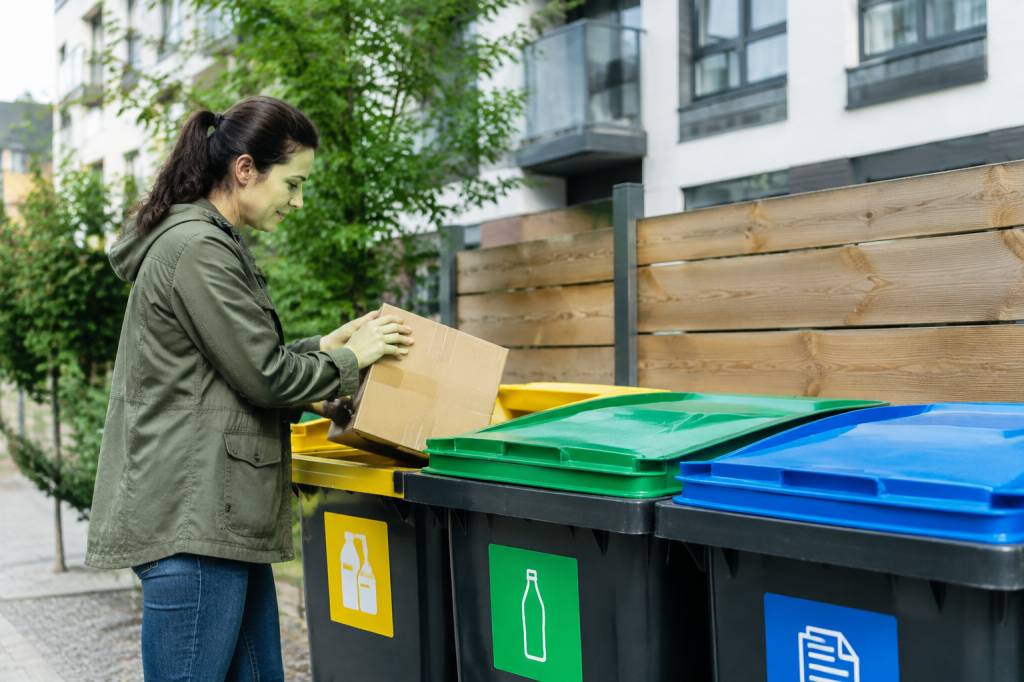
At the end of a working day, a business leaves more behind than a switched-off screen and a few lights in the corridor. There may be cardboard stacked beside the loading bay, coffee grounds in the kitchen bin, packaging from a morning delivery and a broken printer waiting for someone to decide what happens next.
That decision matters. Waste removal is often treated as a final, unremarkable step in the life of a product. Yet the way an organisation handles its waste can affect its costs, its reputation and the communities around it. A more sustainable approach does not require every business to become a zero-waste pioneer overnight. It begins with a better question: could this material be used again, repaired, donated or recycled before it is thrown away?
Why waste removal is a business issue
Waste is easy to ignore when it disappears into a bin and is collected before the next working day. But the bin is not the end of the story. Materials may be sorted, recycled, treated, incinerated or sent to landfill. Each route has environmental consequences, and the cost of collection can rise when recyclable materials are mixed with general waste.
For businesses, responsible waste management is also part of operating well. It can help control collection costs, make workplaces safer and demonstrate that environmental commitments extend beyond a page on the company website. Customers, employees and suppliers increasingly notice the difference between a promise and a practical habit.
There is a local dimension, too. Cleaner commercial premises, less litter and fewer poorly managed skips make high streets and business parks more pleasant places to work and visit. A company’s waste choices may seem small on their own, but across a town they become part of the character of the place.
Start by understanding what you throw away
Before changing collection arrangements, find out what is actually leaving the premises. A short waste audit can reveal more than a year of guesswork. For a week or two, record the main materials produced, how much is generated and where it comes from. Look at offices, kitchens, warehouses, retail floors and construction areas separately; each has its own habits and opportunities.
You might discover that the biggest problem is not paper but packaging from frequent deliveries. A café may find that food waste is concentrated at the end of the lunch service, while an office may be filling its general bins with clean cardboard and recyclable cans. The point is not to produce a perfect spreadsheet. It is to identify the materials that offer the clearest opportunity for change.
Useful questions include:
- Which materials make up most of the waste by volume or weight?
- Are reusable or recyclable items being put into general waste?
- Could purchasing choices reduce unnecessary packaging?
- Are bins clearly labelled and placed where people need them?
- Do staff know what happens to the materials after collection?
Even a simple baseline makes progress easier to measure. If general waste falls after a new recycling system is introduced, the change is visible. Without a starting point, improvement can feel like a good intention rather than a result.
Follow the waste hierarchy
Sustainable waste removal does not begin with choosing a greener bin collection. The most effective step is usually to prevent waste in the first place. The waste hierarchy offers a practical order of priorities: prevent, reuse, recycle, recover and, as a last resort, dispose.
Prevention might mean ordering supplies in quantities that match actual demand, switching to durable equipment or asking suppliers to reduce excess packaging. Reuse could involve refillable containers, reusable transit packaging or passing on furniture that is no longer needed. Recycling has an important role, but it cannot make unnecessary consumption disappear.
Consider a small design studio replacing its office furniture. Sending every old desk and chair for disposal may be quick, but some pieces might be suitable for another community organisation, a local reuse network or a staff member. Equipment that cannot be reused may still contain recyclable materials. A little planning before collection can keep useful items in circulation and reduce the volume requiring disposal.
That is a shift in perspective: from “How do we get rid of this?” to “What is the next useful life for it?”
Make recycling easy to get right
Recycling systems often fail for ordinary reasons. A bin is too far away. Labels are confusing. A food container is covered in leftover lunch. Someone is unsure whether a material is accepted locally, so it goes into the nearest opening. Good intentions do not always survive a busy shift.
Businesses can make the right choice easier by placing clearly labelled recycling and general waste bins together in convenient locations. Use words and examples rather than relying only on colour, since colour schemes and accepted materials can vary between collection providers. Keep guidance short: a photograph of the items accepted can be more useful than a dense paragraph of instructions.
Contamination matters. When non-recyclable items, food or liquids get mixed with otherwise recyclable material, a whole load may be harder or more expensive to process. Ask your waste contractor what it accepts and how materials should be prepared. Local rules differ, so a familiar symbol on packaging is not always a guarantee that an item belongs in a particular business collection.
Training should be practical and repeated when needed. A brief induction, a notice in the staff kitchen and a named person to answer questions can do more than one ambitious launch campaign. If the process is unclear, listen to the people who use it every day; they often know exactly where it breaks down.
Give food and organic waste a better route
Food waste deserves particular attention in hospitality, retail, healthcare and workplace catering. It represents wasted ingredients, energy, labour and money, not merely a full bin. Tracking what is discarded can help kitchens adjust purchasing, portion sizes and preparation. A simple daily record of unsold food or plate waste can reveal patterns that are otherwise easy to miss.
Where food remains safe to eat, businesses may be able to redistribute it through suitable local charities or food-sharing schemes. Donation requires sensible handling, clear procedures and attention to food safety, but it can connect surplus with people who need it. Prevention and redistribution should come before disposal wherever practical.
For unavoidable food waste, a separate collection may be available. Depending on local infrastructure and the provider, it may be sent for processes such as anaerobic digestion or composting. These routes are not interchangeable everywhere, so businesses should check what happens to the material rather than assuming that “organic” automatically means environmentally sound.
A bakery, for example, might reduce surplus by reviewing production at quieter times, offer suitable unsold items through an established donation partner, and separate unavoidable scraps for an appropriate collection. Each step addresses a different part of the problem.
Handle specialist waste with care
Not every waste stream belongs in an ordinary recycling bin. Electrical and electronic equipment, batteries, fluorescent lamps, oils, chemicals, confidential paper and some construction materials may require specialist handling. Mixing them with general waste can create safety risks and prevent valuable materials from being recovered.
Businesses in the UK have legal responsibilities for waste they produce, including taking reasonable steps to ensure it is handled by authorised businesses and keeping appropriate documentation. Requirements vary with the type and quantity of waste, and rules can change. Check current guidance from the relevant regulator and use a competent, appropriately authorised contractor. For potentially hazardous materials, seek specific advice rather than relying on a general collection service.
Electrical equipment is a good example. A broken laptop may contain materials that can be recovered, but it can also hold confidential information. A suitable process should address both secure data handling and responsible treatment of the equipment. The same principle applies to confidential paper: shredding is useful only if the resulting material then follows a suitable recovery route.
Choose a contractor for transparency, not just price
The lowest collection price may not represent the best value if service is unreliable or the destination of the waste is unclear. When comparing providers, ask what happens to each waste stream, how collections are recorded and what happens if a load is contaminated. Find out whether the contractor can help identify opportunities to reduce waste, not simply remove it.
Useful questions include:
- Which materials do you collect, and how should they be separated?
- Can you provide records or reports showing collection weights and destinations?
- What evidence can you provide about the treatment route?
- How are missed collections or contamination issues handled?
- Can collection frequency be adjusted as our waste volumes change?
Clear reporting helps a business track performance and support its environmental claims with evidence. It also makes it easier to spot changes, such as a sudden increase in packaging waste after a supplier switch. Be cautious of vague assurances. A credible provider should be willing to explain its service in plain language.
Bring the community into the picture
Businesses do not operate in isolation. A local shop might work with a nearby repair business to extend the life of fixtures. An office could pass usable equipment to a school, charity or community group. A restaurant may partner with a local organisation to redistribute suitable surplus food. These arrangements can reduce disposal while strengthening connections between organisations.
There are practical benefits beyond the material itself. Sharing collection facilities in a suitable business district, coordinating deliveries or working with a local reuse network may help reduce unnecessary journeys and costs. Such arrangements need clear ownership and safety procedures, but they can turn waste management into a shared local project rather than a private back-room task.
For a small business, the first conversation might be as simple as asking a neighbouring firm how it handles cardboard or whether a local reuse organisation accepts office furniture. Sustainable change often begins with that kind of ordinary exchange.
Measure progress and keep improving
A waste plan works best when it has a few clear measures. Track total waste, the amount sent for recycling or reuse, contamination incidents and the cost of collections. Where possible, compare figures over time and relate them to business activity. A growing company may generate more waste overall while producing less per employee, customer or unit of product.
Share results with staff. If a new system cuts general waste or prevents hundreds of usable items from being discarded, say so. Recognition helps people see that small daily choices have a practical effect. If the figures do not improve, treat that as information rather than failure: the bins may be poorly placed, the contractor’s guidance may be unclear or the original plan may not fit the way the business works.
Eco-friendly waste removal is not a single purchase or a polished policy. It is a series of decisions made at the point of ordering, using, sorting and collecting. A business that understands its waste, prioritises prevention, separates materials carefully and works with accountable partners can reduce its impact while making operations more resilient.
And the next time a full bin waits beside the door, it may prompt a more useful question than who is taking it out: what still has value here, and where could it go next?