


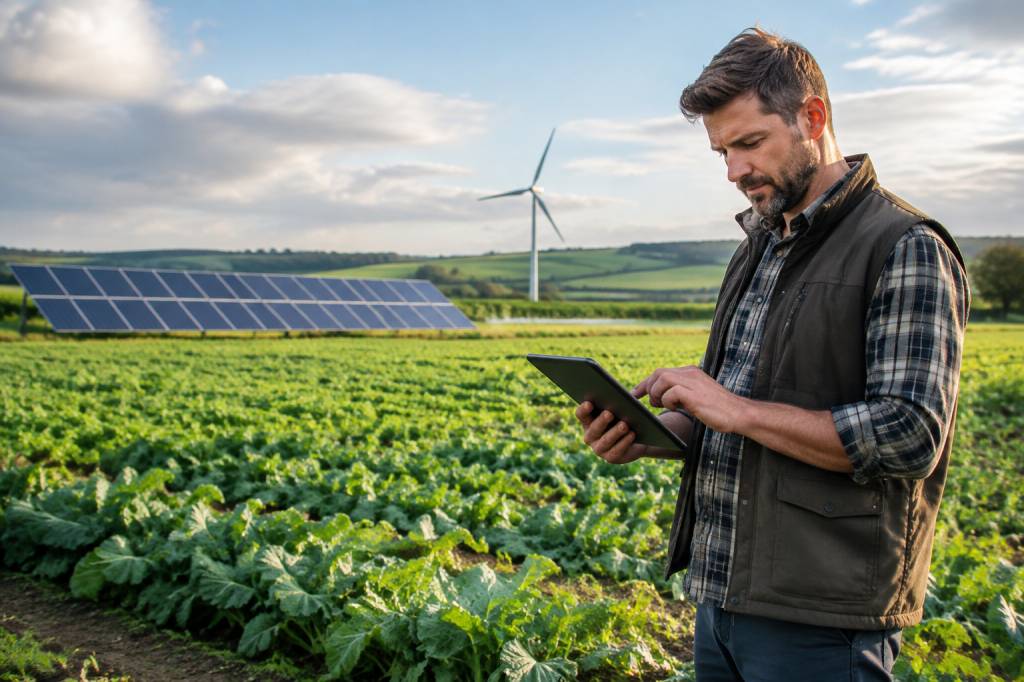
On a British farm, the weather has always been part of the business plan. It decides when the ground is ready, whether the harvest comes in on time and how much feed the animals need. What is changing is the rhythm. Hot, dry spells can arrive when crops need water most; heavy rain can turn fields into mud and delay planting. For farmers and the businesses that depend on them, climate change is no longer a distant forecast. It is a practical challenge, measured in lost working days, stressed crops and rising costs.
The UK’s climate is becoming warmer and more variable. Winters are generally milder and wetter, while hotter summers and periods of drought are more likely. Not every season follows the same pattern, and local conditions matter. A farm in eastern England may worry about water availability, while a livestock business in the west may face persistent rain and saturated fields. But across the country, the question is increasingly the same: how can a business stay productive when familiar conditions are less reliable?
When the seasons stop keeping their appointments
Farming is built on timing. A few dry days can make the difference between sowing a crop on schedule and watching the opportunity disappear. A sudden downpour at harvest can damage grain quality or prevent machinery from entering a field. And a warm spring may encourage plants to grow early, only for a late frost to catch them out.
These changes create knock-on effects beyond the farm gate. Processors need consistent supplies. Food manufacturers need to plan production. Retailers need dependable deliveries and prices that customers can manage. When weather disrupts a harvest, the pressure travels through the supply chain, sometimes reaching a shop shelf months later.
There is no single climate challenge facing every UK farm. Soil type, location, crops, livestock and access to water all shape the risks. That is why adaptation rarely begins with a dramatic new technology. Often, it begins with a closer look at the land: where water collects, which fields dry out first, and which parts of the business are most exposed when the weather turns.
Building resilience from the soil up
Healthy soil can help farms cope with both downpours and dry spells. Soil with plenty of organic matter tends to absorb and hold more water, while good structure allows excess rainfall to drain rather than run off. Practices such as cover cropping, reduced tillage and adding organic material can support soil health, although the best approach depends on the farm and its ground.
Cover crops are planted between main crops, rather than leaving fields bare. Their roots help hold soil in place, and their growth can improve soil structure and reduce erosion. They can also provide a useful source of forage. In a wet winter, a covered field may be less vulnerable to soil washing away; in a dry period, improved soil condition may help retain moisture. These are gradual gains, not instant insurance, but they can add up over time.
Consider a mixed arable farm that has seen heavier rain wash soil from a sloping field. The owner might test a cover crop, adjust cultivation, and keep records of soil condition and yields across several seasons. The point is not that one change will solve everything. It is that careful trials give the business local evidence, rather than relying on a promising idea that worked somewhere else.
For some farms, hedgerows, trees and uncultivated margins can also form part of the response. They may slow wind, shelter livestock and support wildlife, while helping to manage water across the landscape. Their value depends on thoughtful placement: a tree in the wrong spot can compete with crops for light or water, while a well-planned field edge can protect vulnerable ground.
Making every drop count
Water is both a resource and a risk. Drought can limit irrigation and reduce crop growth; intense rain can damage fields, wash nutrients into waterways and leave livestock areas difficult to manage. In parts of England, water scarcity is already a serious planning issue, and pressure may increase as summers become hotter and demand rises.
Businesses are responding by looking beyond the question of how much water they use. They are asking when, where and how it is used. Soil moisture sensors and weather information can help farmers decide whether irrigation is necessary and target it more precisely. Better-maintained pipes and equipment can reduce leaks. On suitable sites, water storage can capture rainfall for use later, subject to the relevant permissions and environmental safeguards.
Some farms are also changing field layouts and drainage. That might mean improving drainage where waterlogging repeatedly delays work, or creating features that slow water and reduce runoff. Drainage alone is not a universal answer: moving water quickly off one field can create problems further downstream. The more durable approach considers the whole catchment, including neighbouring land and local ecosystems.
For a business, these decisions have a financial dimension. New equipment and storage require investment, while careful water management can reduce waste and protect production. The strongest case is usually built with real farm data: how often a field needs irrigation, how much water is lost, and what a dry year costs in reduced output.
Choosing crops for a less predictable climate
Some businesses are reviewing what they grow as well as how they grow it. A warmer climate may make new varieties or crops viable in some areas, but warmer does not automatically mean easier. Crops still need the right soil, water and growing conditions, and a mild winter can bring more pests or disease.
Variety choice can offer a relatively practical form of adaptation. Farmers may select crops with stronger drought tolerance, different maturity dates or greater resistance to particular diseases. Planting a mix of varieties can spread risk: if one struggles in an unusual season, another may perform better. Crop rotation can also help manage soil health and reduce reliance on a narrow production system.
Diversification is not a guaranteed route to profit. A new crop may need specialist machinery, processing capacity or a buyer willing to take it. Before committing, a business needs to consider the whole chain: seed, labour, storage, transport and market demand. A crop that thrives in a field but has nowhere to go is not much of a business strategy.
That is why collaboration matters. Farmers, food manufacturers and retailers can share information about future demand and agree standards for unfamiliar crops. Local businesses can help build markets, while agricultural advisers and research organisations can support trials. Adaptation becomes more realistic when the risk is not carried by the grower alone.
Looking after livestock in hotter weather
Heat affects animals as well as crops. During hot spells, livestock may eat less, become stressed and produce less milk or meat. The effects can be especially acute in housing with poor ventilation, or in fields without shade and reliable water.
Farmers can reduce heat stress through practical measures: providing clean water, improving airflow in buildings, adjusting handling or transport schedules, and ensuring animals can access shade where appropriate. Grazing plans may also need to change if grass growth becomes less reliable through summer. Some businesses are exploring different breeds or herd characteristics, but breeding decisions take time and must account for welfare, productivity and local conditions.
These measures are not merely about protecting output. Animal welfare is a responsibility in its own right, and well-managed animals are better placed to withstand difficult conditions. A heatwave plan can set out who checks water supplies, when inspections happen and what action to take if temperatures reach a concerning level. Simple procedures are easier to follow when staff are busy and the thermometer is climbing.
Using data without losing the human judgement
Technology is becoming a useful partner in farm adaptation. Weather apps, satellite images, soil sensors and farm management software can help businesses spot patterns and make more informed decisions. A forecast may help a grower choose a planting window; remote monitoring can identify a water problem before it becomes a larger loss.
But data is not a substitute for experience. A regional forecast cannot always capture the conditions in one field, and a sensor is only useful if it is correctly installed and interpreted. The most effective approach combines local knowledge with reliable information. Farmers know how a field behaves after rain; tools can help them compare that experience across seasons and share it with advisers or business partners.
Digital systems also bring costs and practical questions: who maintains the equipment, how secure is the data, and does the benefit justify the subscription? For smaller businesses, shared services, cooperative purchasing and advice from trusted agricultural organisations can make useful tools more accessible.
Planning for the business, not just the field
Adaptation is also a matter of financial resilience. A farm may need to reconsider insurance, credit, investment plans and contracts with buyers. If a particular crop is increasingly vulnerable to dry summers, relying on it for most of the business can make a difficult year even harder. A clearer risk assessment can help owners decide where to invest first and what contingency plans to put in place.
Food companies and retailers have a role here too. Long-term supplier relationships can give farmers more confidence to invest in soil improvements, water efficiency or new crop trials. Short-term contracts and shifting specifications can make that investment harder to justify. If businesses want a more climate-resilient supply chain, they need to share both information and responsibility.
Government support, research and local infrastructure matter as well. Farm businesses cannot independently solve every issue caused by floods, drought or changing markets. Practical adaptation may depend on accessible advice, appropriate investment support, reliable transport links and cooperation across river catchments. The resilience of one farm is often connected to the decisions made beyond its boundaries.
Preparing before the next difficult season
There is no perfect forecast for a particular field ten years from now. But uncertainty is not a reason to wait. Businesses can start with a straightforward review: identify the weather events that have caused the greatest disruption, map the most vulnerable parts of the operation, and decide which low-cost changes can be tested this season.
-
Keep records of rainfall, yields, soil condition, irrigation and weather-related losses.
-
Review water use and identify opportunities to reduce waste or store water responsibly.
-
Talk with buyers, advisers and neighbouring farms about shared risks and possible solutions.
-
Trial changes on a manageable scale before investing across the whole business.
-
Prepare clear plans for drought, flooding, heat stress and disruption to deliveries.
Adaptation is rarely a single purchase or a dramatic change of direction. It is a series of decisions made with an eye on the next season and the decades beyond it. A healthier soil, a more careful use of water, a wider choice of crops and a stronger relationship with buyers can each make a business less exposed.
The weather will remain unpredictable; that has always been part of farming. The difference is that businesses must now plan for a wider range of conditions, and for familiar seasons that may no longer arrive on schedule. UK farms are responding field by field, combining long experience with new tools and shared learning. In that work lies a practical kind of optimism: not the belief that every season will be kind, but the confidence that better preparation can help a business meet whatever comes next.