


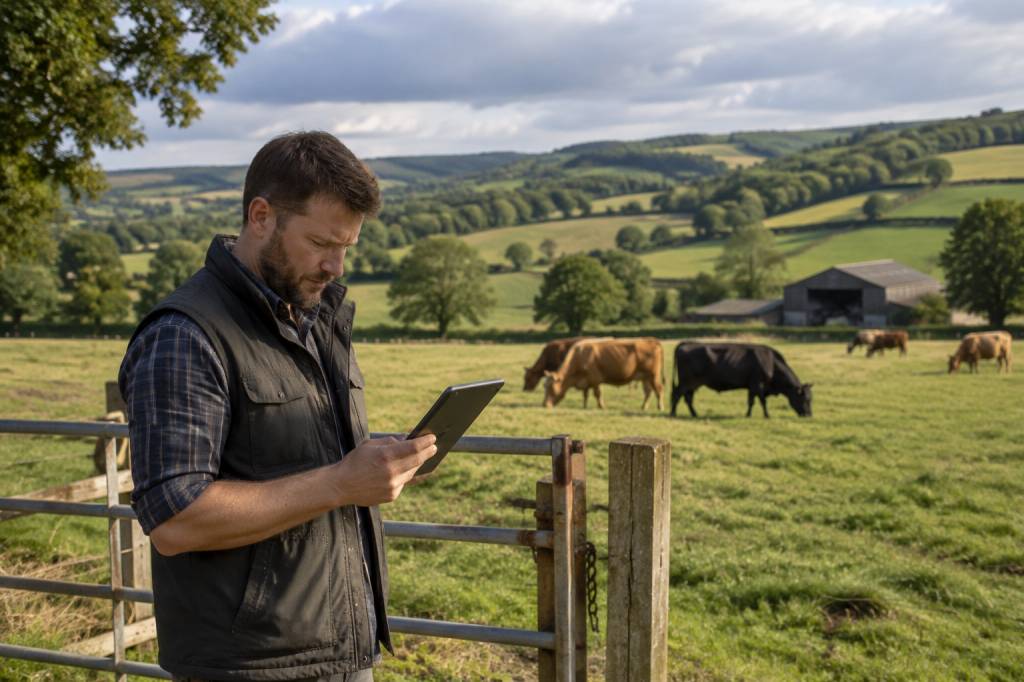
At first light, a farm can look untouched by politics. Mist hangs over the fields; a tractor moves along a hedge; cattle wait at a gate. Yet behind that familiar scene sits a changing web of laws, payments and environmental rules. For farming businesses and rural communities across the UK, agriculture acts are not distant documents. They influence what gets planted, how land is managed, where investment goes and whether a family farm can pass to the next generation.
The challenge is that there is no single agricultural rulebook for the whole country. Since the UK left the European Union, England, Scotland, Wales and Northern Ireland have been shaping their own approaches. Their choices reflect different landscapes, political priorities and farming traditions. To understand the impact, it helps to look not only at what each act says, but at what it asks farmers to do.
From European support to home-grown policy
For decades, UK farming was shaped by the European Union’s Common Agricultural Policy. Direct payments linked to the amount of land a business farmed formed a significant part of income for many holdings. The system was often criticised: critics argued that it rewarded land ownership more than good environmental outcomes, while supporters valued the predictable cash flow it provided.
Leaving the EU gave the UK governments room to redesign agricultural policy. It also brought uncertainty. A payment that had been built into a farm’s annual budget could not simply disappear without affecting decisions about machinery, labour, rents and borrowing. For some farms, the transition has felt less like changing a policy and more like replacing the floor while standing on it.
New agricultural legislation has generally tried to connect public support with public benefits: cleaner water, healthier soils, thriving wildlife and lower emissions. That shift can create new opportunities, but it also changes the calculations behind everyday farm management.
England’s Agriculture Act and the move towards public goods
The Agriculture Act 2020 provides the main legislative framework for agricultural policy in England. One of its central ideas is that public money should increasingly reward farmers for delivering public goods—benefits such as environmental improvement, rather than simply the production of food.
In practice, this has meant moving away from the old area-based direct payments and towards schemes that pay for particular actions or outcomes. The transition has taken place over several years, with payment reductions phased in as new support has been introduced. For a farm business, the important question is not just how much support is available, but whether a new scheme fits the farm’s soils, workforce, cash flow and long-term plans.
Environmental Land Management schemes, including the Sustainable Farming Incentive, have become a prominent part of England’s approach. Farmers may be paid for actions such as managing soil, creating wildlife habitat or improving nutrient use. A mixed farm might, for example, combine productive cropping with carefully chosen field margins or soil-management actions. The aim is to make environmental care part of the business plan, not an ornamental extra.
But schemes bring administration as well as opportunity. Applicants need to understand eligibility, commitments, records and inspection requirements. A payment for a particular action may be attractive on paper yet unsuitable if it complicates a rotation or takes land out of production at the wrong moment. Good advice and clear guidance therefore matter as much as the headline rate.
The act also strengthened the framework for agricultural tenancy matters and farm animal welfare, and it provides powers relating to supply-chain fairness and food security. These areas touch different parts of rural life: the relationship between landlords and tenant farmers, the treatment of livestock, and the resilience of the food system on which every community depends.
Food security is more than a harvest figure
The Agriculture Act 2020 requires the government in England to report periodically on food security. That requirement recognises a basic truth: food security is not simply a question of how much food is grown in one season. It also depends on supply chains, labour, energy, fertiliser, transport, trade and the ability of households to afford food.
Consider a vegetable grower whose produce is ready for market but who cannot secure enough seasonal workers, or a livestock business facing sharply higher feed and energy costs. The farm may be productive, yet its resilience is under pressure. A food security report cannot solve those problems by itself, but it can make risks more visible and give policymakers a clearer basis for action.
For rural businesses, visibility matters. Farms are connected to hauliers, machinery repairers, abattoirs, food processors, local shops and markets. When a key link closes or becomes unreliable, the effect travels through the local economy. Agricultural policy therefore shapes more than the farm gate: it can influence the strength of the wider rural business network.
Different nations, different paths
Devolution means that agricultural policy does not follow one uniform UK model. Scotland, Wales and Northern Ireland have their own legislation, institutions and priorities. A farmer operating near a border may encounter different schemes and requirements within a short drive, even where the landscape looks much the same.
In Wales, the Agriculture (Wales) Act 2023 sets a framework for future support and places sustainable land management at its centre. The approach recognises the many roles Welsh land plays: producing food, supporting rural livelihoods, storing carbon, protecting water and sustaining biodiversity. That balance is particularly important in a nation where many farms are livestock-based and family-run.
Scotland’s Agriculture and Rural Communities Act 2024 provides powers to support agriculture and rural communities, including the development of future support arrangements. Scottish policy reflects the country’s varied geography, from productive lowland farms to crofting and more remote rural areas. A measure that suits a large arable unit may be a poor fit for a small island holding, so flexibility is not a luxury; it is a practical necessity.
Northern Ireland has its own agricultural and environmental policy context, shaped by its land use, cross-border relationships and distinctive farming economy. The wider UK picture is therefore best understood as a family of related approaches rather than one single system. Businesses should check the rules and support available in their own nation instead of assuming that a neighbour’s scheme applies to them.
Innovation, gene editing and the future of crops
Not every agriculture-related act is about grants or land management. The Genetic Technology (Precision Breeding) Act 2023 created a framework in England for certain precision-bred plants and animals, distinguishing them in law from genetically modified organisms subject to a different regulatory regime. Its purpose is to enable the development and use of organisms with genetic changes that could also arise through traditional breeding.
Supporters see potential for crops with greater disease resistance, improved yields or better tolerance of challenging conditions. For farmers, those traits could eventually mean fewer losses or less reliance on some inputs. The promise, however, is not the same as an immediate result. Research, regulation, investment and public confidence all affect whether a new variety becomes useful in the field.
There are also questions about market access and customer expectations. A farming business producing for a particular buyer may need to understand that buyer’s standards before adopting new technology. Innovation works best when it solves a real problem and fits the whole chain, from seed and field to processor and shopper.
What changes for a farming business?
Legislation rarely arrives as one dramatic moment on the farm. Its effects are more often felt through a sequence of decisions: whether to enter a scheme, change a rotation, invest in a slurry system, renegotiate a tenancy or delay buying equipment. For many businesses, the practical impact can be grouped into a few areas:
-
Cash flow: As payment systems change, businesses may need to plan for reduced or differently structured support. Forecasting several years ahead can help identify a gap before it becomes urgent.
-
Land management: Environmental actions may offer income and improve the farm’s natural assets, but they need to be matched to local conditions and production goals.
-
Administration: Applications, evidence and record-keeping take time. Clear farm records are increasingly valuable, whether a business is applying for support or simply tracking its performance.
-
Investment: New rules can change the case for machinery, infrastructure and technology. Advice from accountants, agronomists, land agents and rural business specialists can help test the numbers.
-
Risk management: Weather, input prices, labour availability and regulation interact. A resilient plan considers them together rather than treating each as a separate problem.
Take a hypothetical mixed farm in the Midlands. Its owners are considering an environmental agreement on part of the holding while keeping the rest in food production. The decision is not simply “environment or farming”. They need to compare payment income with foregone output, check how the agreement fits their rotation, and consider whether habitat work could improve pollination or soil condition elsewhere on the farm. The right answer will depend on the land, the contract and the people doing the work.
Rural communities feel the ripple effects
When a farm changes its workforce, land use or spending, the local effects can be substantial. A farm that invests in environmental work may hire contractors, fencing specialists or ecological advisers. Another that faces a squeeze on income may postpone machinery repairs or buy less from local suppliers. Neither outcome stays neatly within the farm boundary.
Rural communities also depend on the services and skills that farming helps sustain. Agricultural colleges, veterinary practices, auction marts, machinery dealers and food businesses form a web of relationships. If policy rewards new skills or investment, it can help that web adapt. If rules are difficult to navigate or support feels unpredictable, smaller businesses may struggle to keep up.
There is a human dimension, too. Farming decisions are often bound up with family identity and stewardship across generations. A change in support can prompt difficult conversations about succession, debt and whether a holding remains viable. Behind every application form is someone deciding what kind of future their land can support.
Making policy work on the ground
Good legislation sets direction, but its success depends on delivery. Schemes need clear guidance, dependable payments and rules that recognise real differences between farms. Environmental targets must be ambitious enough to matter, yet practical enough for people to achieve them. And food production should not be treated as an afterthought: farms need viable businesses if they are to invest in nature, innovation and resilient supply chains.
For farmers, a useful first step is to identify which rules apply in their nation and review current commitments with a trusted adviser. Then map the business: income sources, tenancy terms, environmental assets, labour needs and planned investment. That picture can reveal where a new scheme is an opportunity, where it adds risk and what information is still missing.
Agriculture acts set the direction of travel, but they do not determine every outcome. Their real impact emerges in the choices made by farmers, communities, buyers and governments—often in small, practical decisions made long before anyone notices a change in the landscape. The fields may still look timeless at dawn. The business behind them is anything but.